The Interest-Rate Cliff: Will Your Fixed-Rate BTL Deals Survive 2026/27?
Hundreds of thousands of UK BTL fixes end in 2026. We simulate +1/+2/+3pp rate shocks on the revert rate, re-run lender ICR at the new payment, and surface which deals refinance — and which don't.
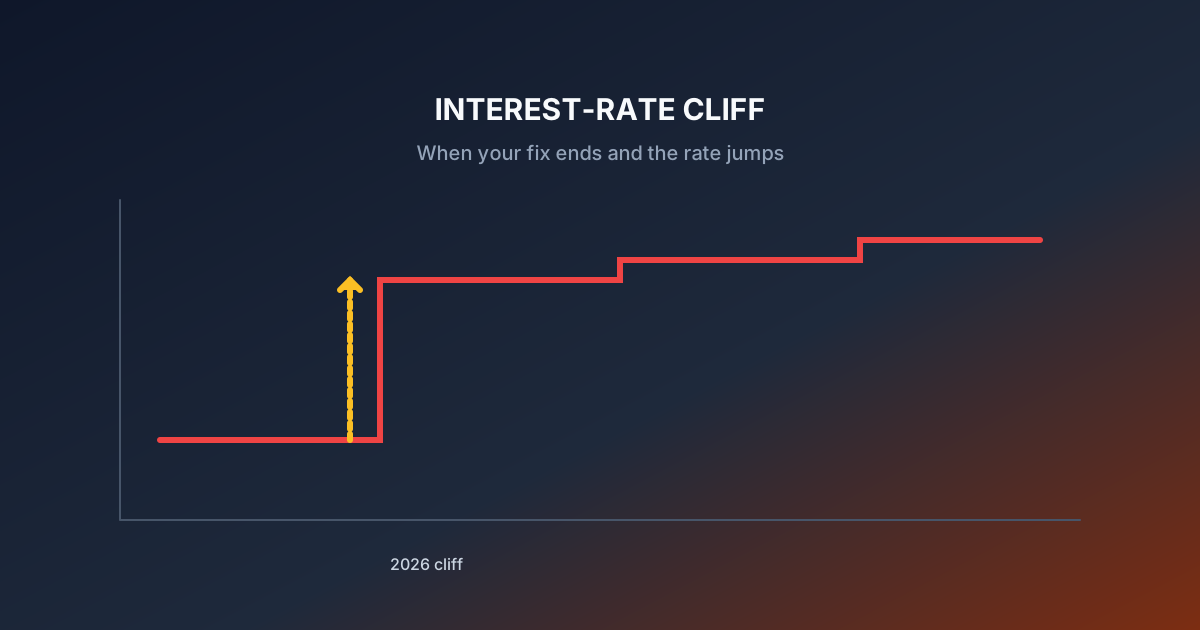
Most UK BTL borrowers fixed at 2–4% in 2021–2022. Those fixes end through 2026/27 — and most revert to rates in the 6–8% range. Two things matter: (1) the new monthly payment, and (2) whether the lender's ICR re-test even lets you refinance.
The two-step shock
Step 1: payment jump
£200,000 interest-only loan at 3.5% = £583/mo. The same loan at 6.5% = £1,083/mo. That's £6,000/yr more in cash going out. Multiply by a portfolio.
Step 2: lender ICR re-test
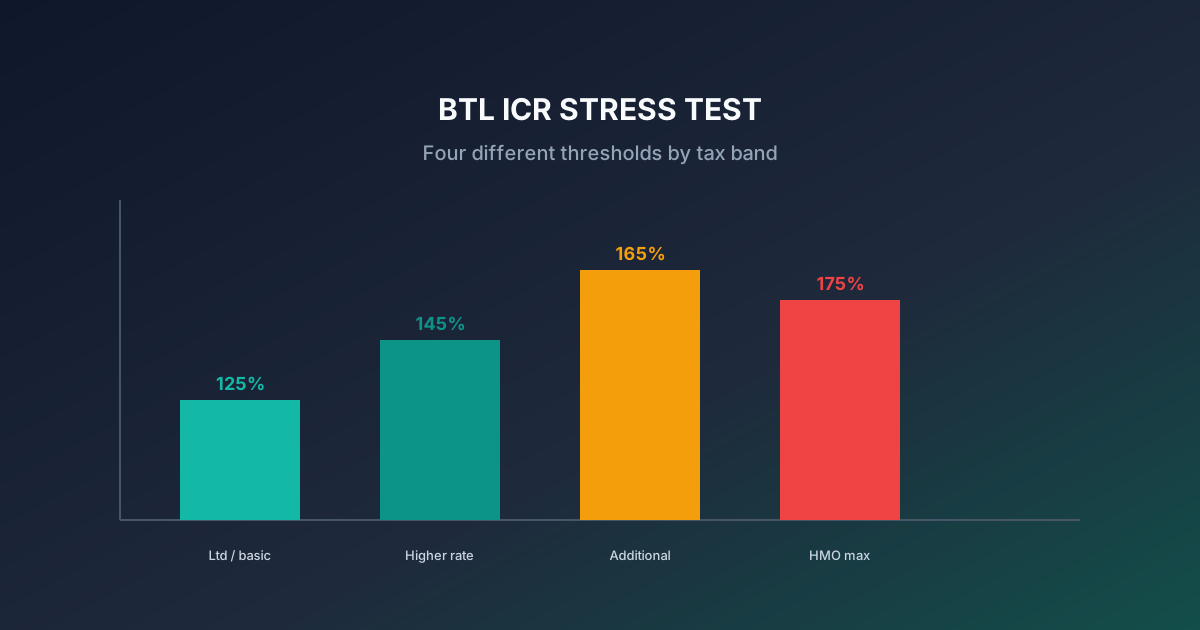
Lenders stress at 5.5% × 125% (Ltd / basic) or 145% (higher rate) or 165% (additional). Many deals that passed at 2022 rates fail at 2026 rates — you can't refinance, you can't get a product transfer at the same rate, and you fall onto SVR.
What we model
The Rate Shock / Refinance Cliff simulator sweeps +0/+1/+2/+3pp shocks on the post-cliff rate, calculates the new payment, and re-runs the ICR test at each shock to flag failures. The Portfolio Dashboard aggregates the shock across a whole portfolio — and shows how many properties go cash-negative.
What to do
- Map every fix-end date. Know which months are the cliff months.
- Get a product-transfer quote early (your existing lender doesn't always re-stress).
- If you'll fail ICR at the new rate, prepare to inject capital, raise rents, or sell pre-cliff.
- For higher-rate landlords, this is the moment to seriously model the personal-vs-Ltd flip.