BTL ICR Stress Test Explained: Why Lenders Run Four Different Tests
You don't get one max-loan number — you get four, depending on your tax band and product. We unpack the 125% / 145% / 165% ICR thresholds, the 5.5% stress rate, top-slicing, and how 5-yr fixes change the maths.
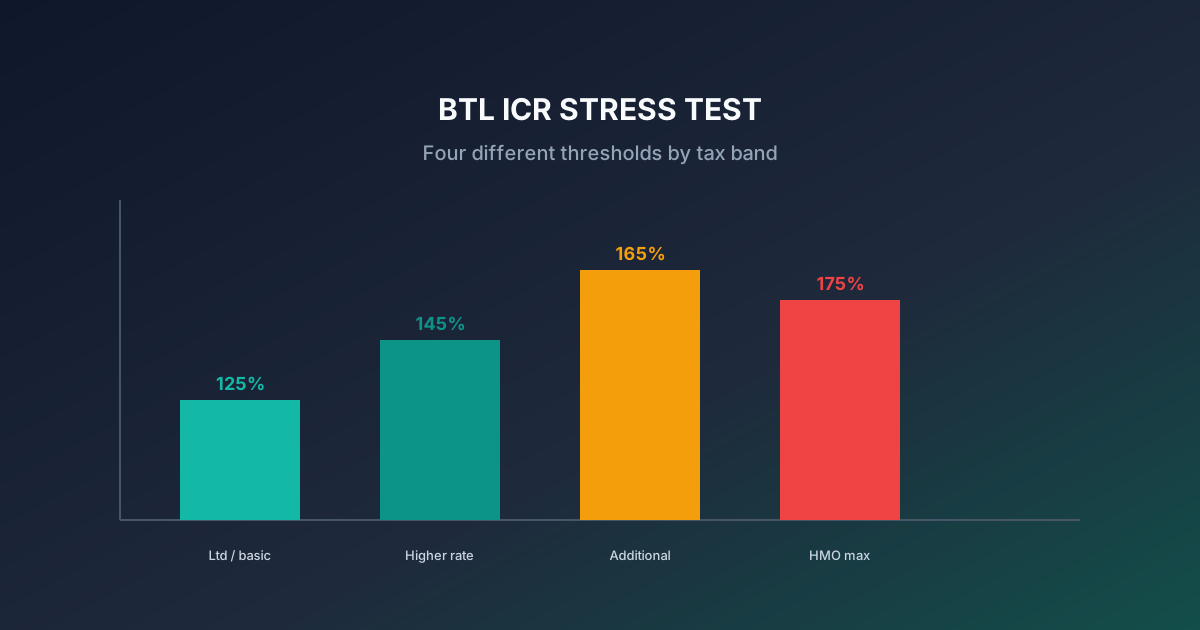
ICR — Interest Coverage Ratio — is the lender's stress test for BTL. It asks: at a stressed interest rate (typically 5.5%), what's the rent-to-interest-only-payment ratio? Different lenders require different ratios, and different products use different stress rates. You don't get one max-loan number — you get four.
The four standard tiers
| Scenario | ICR | Stress rate |
|---|---|---|
| Ltd Co / basic-rate individual | 125% | 5.5% |
| Higher-rate individual | 145% | 5.5% |
| Additional-rate individual | 165% | 5.5% |
| HMO / MUFB | 125–175% | 5.5% |
5-year fix loophole
For 5-year fixes, lenders typically stress at the pay rate or rate + 1% — much lower than 5.5%. A 4.5% 5-yr fix often stresses at 5.5%, meaning the ICR is computed at a more generous payment. This is the single biggest reason to consider 5-yr over 2-yr fixes in 2026.
Top-slicing
Many lenders (Paragon, Precise, Aldermore) now permit "top-slicing" — using surplus personal income to bridge an ICR shortfall. Material if you've got £500–£2,000/month of personal income spare after living costs.
What the calculator does
The BTL Mortgage Stress Test runs all four scenarios in parallel: it computes max loan, required rent, and pass/fail for each — with an optional top-slicing field to see how much closer you'd get with a personal-income bridge. Pair it with the Rate Shock simulator for the post-fix cliff view.