Should I Incorporate? A UK Landlord's Decision Framework for 2026
When does incorporating a UK buy-to-let portfolio actually make sense in 2026? A decision framework covering tax band, leverage, horizon, extraction needs and the s162 incorporation relief test.
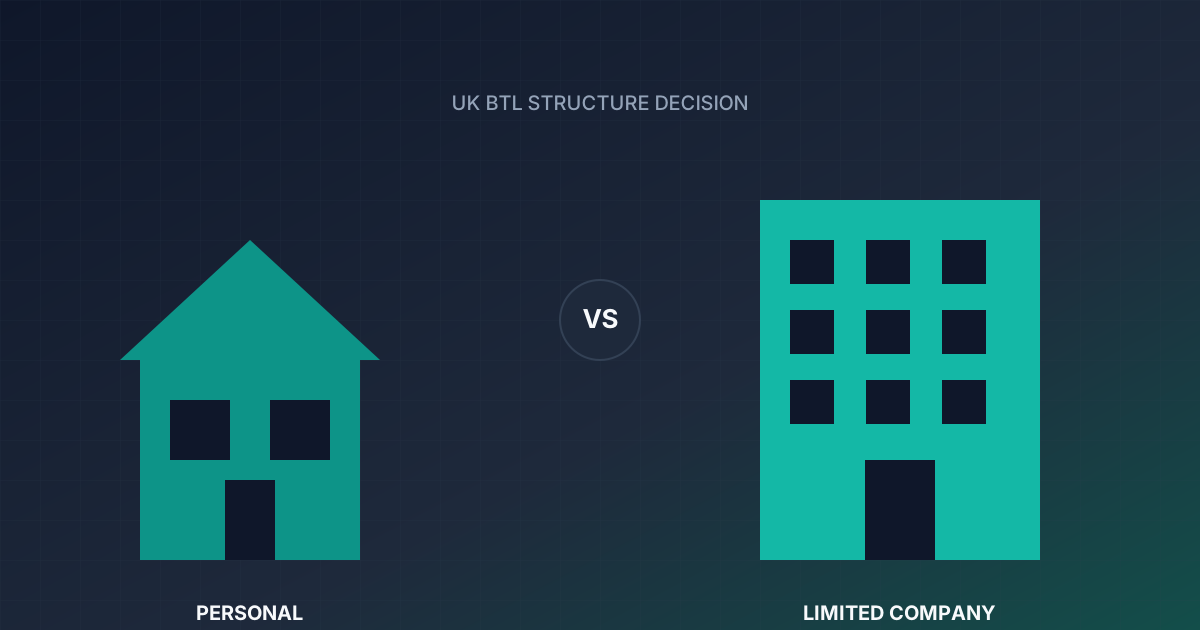
“Should I incorporate my buy-to-let portfolio?” is the most-asked question in UK landlord communities in 2026. The honest answer is “it depends” — but the dependencies are knowable. This framework walks through the four variables that actually determine the answer: your tax band, your leverage, your time horizon, and your extraction needs.
The four-question framework
1. What's your marginal income tax rate?
The fundamental driver. Section 24 only bites above the basic-rate band, because the 20% reducer fully offsets a 20% marginal liability.
- Basic-rate (20%) personal usually wins. Section 24 has zero net effect (20% credit cancels 20% rate). Ltd Co would add an SPV mortgage rate premium and dividend tax for no Section 24 saving.
- Higher-rate (40%) incorporation usually wins, especially long-term. The 20pp wedge is real.
- Additional-rate (45%) incorporation almost always wins.
- In the £100k PA taper zone incorporation wins decisively — pulling rental income off your personal stack drops you out of the 60% effective band.
2. How leveraged is the portfolio?
Section 24 cost scales with mortgage interest. A cash-bought portfolio has no Section 24 problem because there's no interest to disallow.
- LTV < 40%: Section 24 cost is modest. The SPV mortgage rate premium often outweighs the saving.
- LTV 60-75%: Section 24 bites hard. Incorporation looks more attractive.
- LTV > 75%: Section 24 is brutal. Almost any higher-rate landlord with this leverage benefits from Ltd.
3. What's your time horizon?
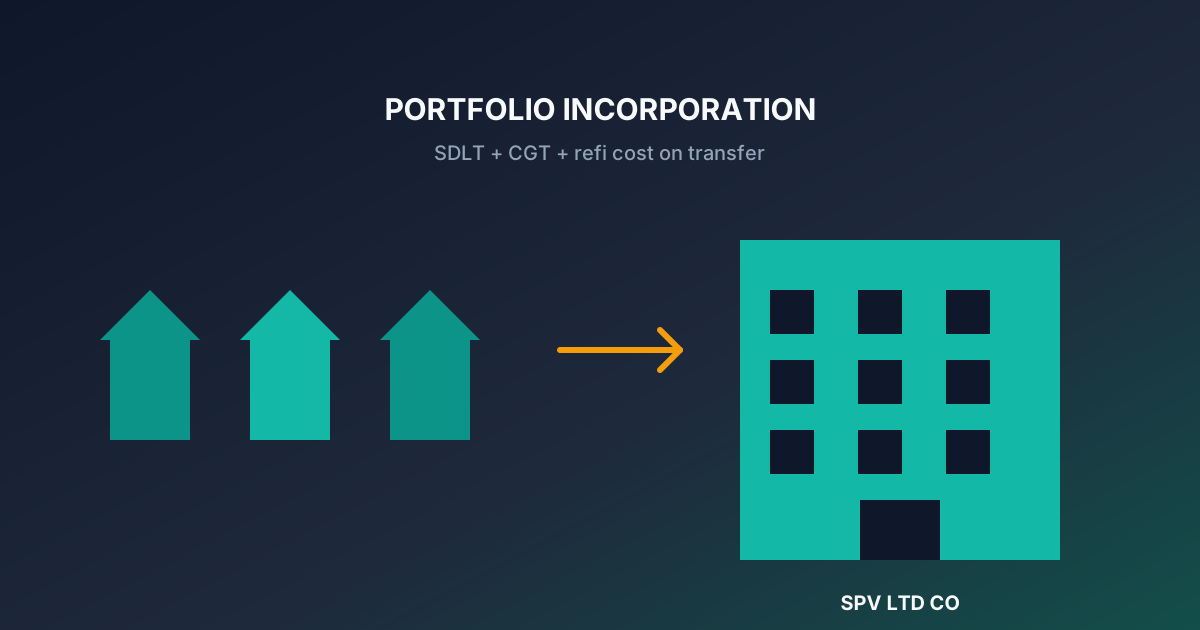
Incorporating an existing portfolio triggers one-off SDLT (the +5% surcharge applies per property) and CGT on the deemed disposal. These costs need amortising over years of Section 24 savings.
- < 5 years to sale: probably not worth incorporating. The one-off cost won't pay back.
- 5-10 years: depends on portfolio size and leverage. Run the numbers.
- 10+ years: incorporation typically pays back, especially for higher-rate landlords.
- New purchases (no incorporation cost): buy in a Ltd from day one if higher-rate. The decision is much simpler.
4. Do you need the rental cash?
Ltd companies pay corporation tax on profits, then dividend tax on extraction. If you don't need the cash personally, retained profits compound at the post-CT rate with no further personal tax.
- Need every penny of rental cash: the Ltd advantage shrinks (you pay dividend tax on extraction). Could still win at higher rates.
- Don't need the cash; reinvesting: Ltd wins decisively. Retained profits compound efficiently — the closest thing to a tax-deferred property pension.
- Hybrid: extract enough for living costs, retain the rest. Optimal for many higher-rate landlords building a portfolio.
The decision matrix
| Profile | Personal | Ltd (existing) | Ltd (new) |
|---|---|---|---|
| Basic-rate, low leverage, short horizon | ✓✓ | ✗ | ✗ |
| Basic-rate, high leverage, long horizon | ✓ | ~ | ✓ |
| Higher-rate, low leverage, short horizon | ✓ | ~ | ~ |
| Higher-rate, high leverage, long horizon | ✗ | ✓✓ | ✓✓ |
| Additional-rate, any profile | ✗ | ✓✓ | ✓✓ |
| £100k taper zone | ✗ | ✓✓ | ✓✓ |
The s162 incorporation relief test
Section 162 of TCGA 1992 defers the CGT trigger on incorporation — your gain rolls into your share base cost rather than crystallising. To qualify, the portfolio must constitute a “business” under the Ramsay v HMRC test. From 6 April 2026, HMRC requires an active claim with documentary evidence: typically ~20+ hours per week active management, multiple properties, genuine business operations.
Passive single-property landlords almost never qualify. Hands-on portfolio landlords with several properties can usually evidence business activity. Specialist advice essential.
The 2027 rate change pushes the answer toward Ltd
From April 2027, individual property income tax rates become 22%/42%/47% — a +2pp uplift on every band. The Section 24 reducer also steps up to 22%, but the net effect is that the Section 24 wedge for higher-rate landlords widens. Ltd companies are unaffected (corporation tax doesn't change in 2027). For higher-rate landlords with 5+ year horizons, the case for Ltd strengthens.
Run your numbers
Use our Personal vs Limited Company calculator to run both stacks year-by-year and see the crossover. Then use Portfolio Incorporation Cost to model the SDLT/CGT/refi one-off, with optional s162 relief, to find break-even.
What this framework doesn't tell you
Numbers aren't everything. Ltd companies have admin overhead (annual accounts, corporation tax returns, Companies House filings) typically £1,500-£3,000/year per company. They're less liquid (extracting cash is taxable; you can't just spend rental income freely). Mortgage market access is narrower. None of this is captured in the spreadsheet — get a chat with a property-specialist accountant before deciding.