Section 24 Calculator: 10 Worked Examples Every UK Landlord Should Know in 2026
Ten Section 24 worked examples for UK landlords in 2026: basic-rate, higher-rate, additional-rate, the £100k taper trap, multi-property aggregation, and the April 2027 22% reducer change.
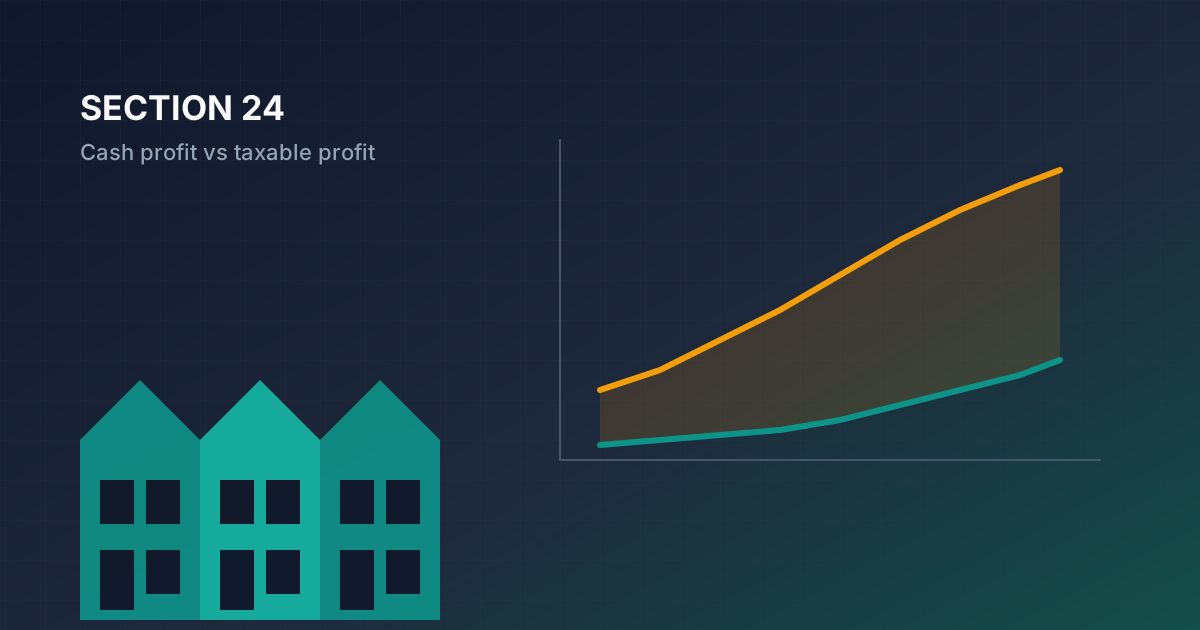
Section 24 is the most-misunderstood UK tax rule of the last decade. The mechanic is simple — no mortgage interest deduction, just a flat 20% credit (rising to 22% from April 2027) — but the cash impact varies wildly by tax band, gearing and income. Here are ten worked examples that cover the situations most UK landlords actually find themselves in.
The Section 24 algorithm in one sentence
Tax reducer = 20% × min(finance costs, taxable property profit, adjusted income above the personal allowance). Subtract this reducer from your income tax bill on (rent − allowable expenses, NOT minus interest).
Most online "Section 24 calculators" use 20% × full interest. Wrong — and overstates the credit by a meaningful margin for many landlords. We use the correct three-way minimum.
Example 1 — basic-rate landlord, no Section 24 cost
Other income £20k, rent £15k, allowable expenses £2k, mortgage interest £6k. Cash profit = £7k.
Taxable profit £13k stacked on £20k = £33k total. Tax on £33k at basic 20% = £4,086. Reducer = 20% × min(6, 13, 33−12.57) = 20% × £6k = £1,200. Net tax £2,886. Tax on £20k without rental = £1,486. Rental tax = £1,400. After-tax cash = £5,600.
Effectively basic-rate landlord pays 20% on cash profit. Section 24 has zero net effect because the credit (20%) equals the marginal rate (20%).
Example 2 — higher-rate landlord, Section 24 bites
Other income £60k, rent £18k, allowable expenses £3k, mortgage interest £8k. Cash profit = £7k.
Taxable profit £15k stacked on £60k. £15k × 40% = £6,000. Reducer = 20% × £8k = £1,600. Rental tax = £4,400. After-tax cash = £2,600. Effective rate on cash profit: 62.9%.
This is the headline Section 24 trap. A 6.7% gross yield → 1.04% net-of-tax yield.
Example 3 — the £100k personal-allowance taper
Other income £95k, rent £20k, expenses £3k, interest £8k. Total taxable: £112k.
Personal allowance tapers from £12,570 to £6,070 (£100k floor + half of £12.5k overshoot). Loss of PA effectively adds ~£2,500 to tax. Combined with Section 24, effective marginal rate on the rental slice exceeds 60%.
Example 4 — additional-rate landlord
Other income £200k, rent £25k, expenses £4k, interest £10k. Taxable profit £21k × 45% = £9,450. Reducer 20% × £10k = £2,000. Rental tax = £7,450. After-tax cash = £4,550. Effective rate: 62%.
Example 5 — multi-property aggregation
Three properties: rents £12k / £18k / £24k = £54k. Expenses £8k. Interest £20k. Treated as one property business.
Taxable profit £46k stacked on £60k other income. Tax at 40% = £18,400. Reducer 20% × £20k = £4,000. Rental tax = £14,400 on £26k of cash profit. Effective rate 55.4%.
Example 6 — what if you had zero interest?
Other income £60k, rent £18k, expenses £3k, interest £0 (unleveraged). Taxable = cash = £15k. Tax £6,000 (40%). After-tax cash £9,000.
Compare with Example 2 — £8k of interest cost you a further £6,400 of after-tax cash (the interest itself plus the Section 24 wedge).
Example 7 — limited company, same property
Rent £18k, expenses £3k, interest £8k. Company profit £7k. Corporation tax £1,330 (19% small profits rate). If retained: cash in company £5,670. If distributed (dividend): basic rate dividend tax 10.75% on £5,170 (after £500 allowance) = £556. Take-home £5,114.
Personal (Example 2): £2,600 after-tax cash. Ltd extract: £5,114. Ltd retain: £5,670. Higher-rate landlord saves £2,514+ per year per property via Ltd.
Example 8 — April 2027 onwards (22%/42%/47% rates)
Same as Example 2 but in tax year 2027/28: rental income at 42%, reducer at 22%.
£15k × 42% = £6,300. Reducer 22% × £8k = £1,760. Rental tax = £4,540. Net: £140 worse than pre-2027. Small per-property but multiplies across portfolios.
Example 9 — Form 17 spousal split
Property held tenants-in-common 99% spouse A (other income £5k) and 1% spouse B (other income £60k). Net rent profit £10k. With Form 17, 99% (£9,900) taxed in spouse A's hands at basic rate.
Spouse A: well within basic band, tax ~£1,980. Spouse B: 1% (£100) × 40% = £40. Total: £2,020 vs £4,000 if entirely in spouse B's hands. £1,980 saved per year for a piece of paper.
Example 10 — when Section 24 makes the reducer cap bind
High interest costs relative to profit can hit the three-way minimum. Other income £25k, rent £15k, expenses £2k, interest £15k.
Taxable profit £13k. Adjusted income above PA = (£25k + £13k) − £12,570 = £25,430. Reducer = 20% × min(15, 13, 25.43) = 20% × £13,000 = £2,600 (capped at profit, not at interest).
Try it on your numbers
These examples are templates. Run your specific situation through the Section 24 multi-year calculator — it applies the correct three-way minimum, projects across 10+ years, and automatically switches to 2027/28 rates from year 2 onwards.